Artificial intelligence (AI) is no longer a tool that only large companies can afford. Today, many small businesses use AI every day to write emails, answer customer questions, create marketing content, organise work, and analyse data.
If you run a small business, you may think AI is too expensive or too difficult to learn. That is no longer true. Many AI tools now offer free plans or affordable monthly subscriptions. Most are also designed for beginners, so you do not need to know programming before you can use them.
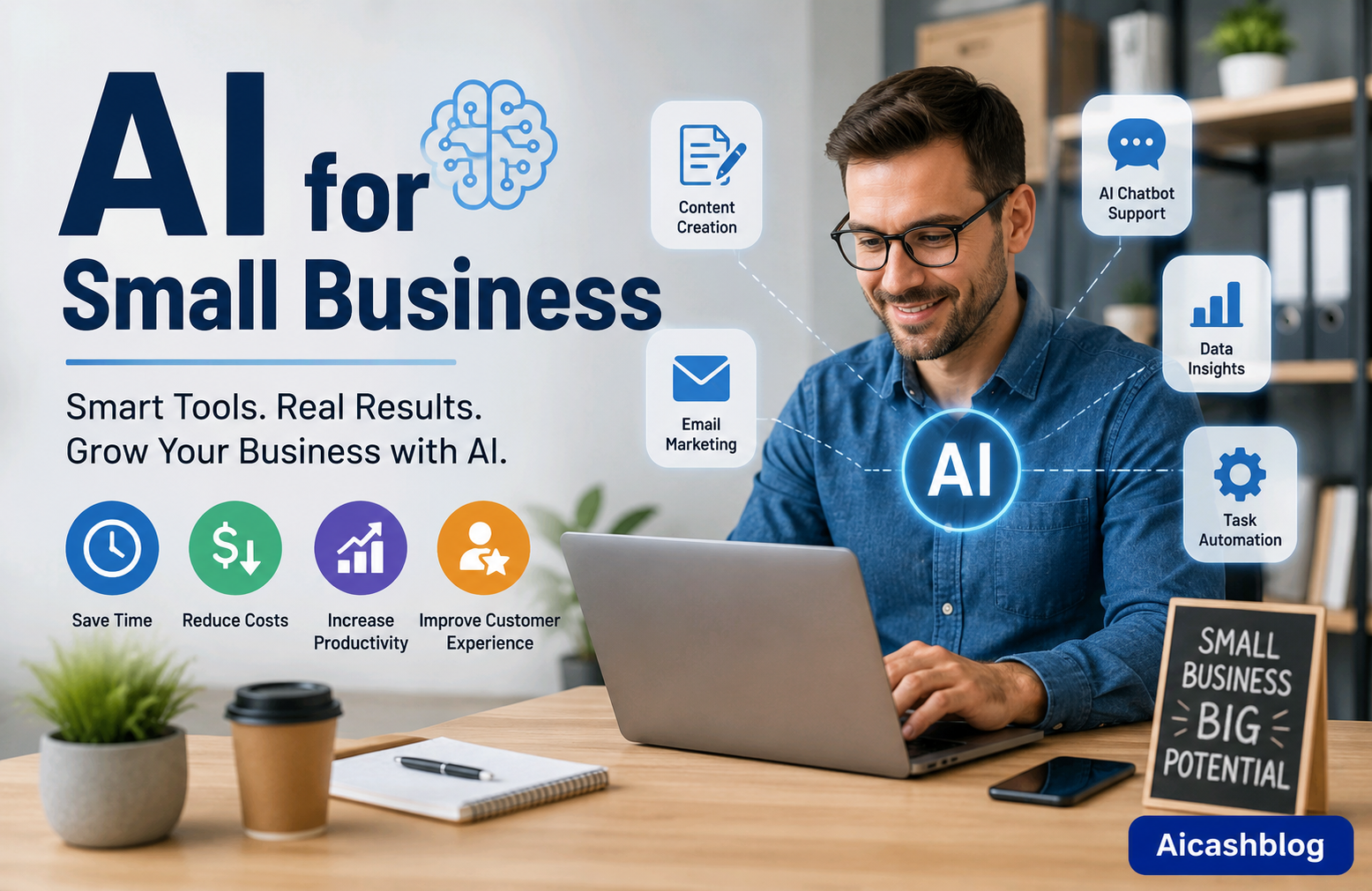
The biggest advantage of AI is that it helps you finish routine work faster. Instead of spending hours writing social media posts, replying to emails, or creating product descriptions, AI can help you complete these tasks in minutes. This gives you more time to focus on serving customers and growing your business.
In this guide, you will learn what AI is, how it can help your business, where you can use it, and how to start using it without feeling overwhelmed.
What Is AI?
Artificial intelligence is computer software that can perform tasks that normally require human thinking.
For example, AI can:
* Write text.
* Answer questions.
* Translate languages.
* Create images.
* Analyse information.
* Summarise long documents.
* Generate business ideas.
* Help you write computer code.
* Predict trends from data.
AI does not think like a human being. Instead, it learns from large amounts of information and uses patterns to produce useful answers. This means AI can make mistakes, so you should always review its work before using it in your business.
Think of AI as a smart assistant rather than a replacement for your knowledge and judgement.
Why Small Businesses Are Using AI
Running a small business often means doing many jobs yourself. You may be the owner, marketer, accountant, customer support agent, and salesperson at the same time.
This can quickly become stressful.
AI helps reduce that workload by handling many repetitive tasks.
Here are some of the biggest reasons small businesses are adopting AI.
Save Time
Time is one of the most valuable resources in any business.
Instead of writing every email from scratch, AI can create a first draft in seconds. It can also summarise meetings, prepare reports, organise notes, and help you plan your work.
Saving just one hour each day can make a big difference over a month or a year.
Reduce Costs
Hiring employees for every task is not always possible when your business is still growing.
AI allows you to complete many jobs without immediately employing extra staff. While AI does not replace skilled workers, it can reduce the amount of repetitive work they need to do.
Improve Customer Service
Customers expect quick replies.
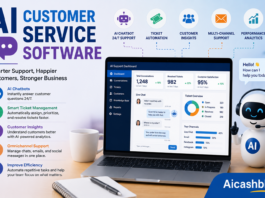
AI-powered chat assistants can answer common questions at any time of the day or night. They can also direct customers to the right information before a human team member takes over more complex issues.
This helps improve customer satisfaction while reducing your workload.
Increase Productivity
Many business owners spend too much time on repetitive work.
AI allows you to automate routine tasks so you can spend more time finding customers, improving products, or planning your business strategy.
How AI Can Help Different Types of Small Businesses
One of the best things about AI is that it works across many industries.
Retail Shops
If you sell products online or in a physical shop, AI can help you:
* Write product descriptions.
* Create promotional emails.
* Suggest product recommendations.
* Answer customer questions.
* Forecast demand.
Bloggers and Content Creators
If you own a blog like AICashBlog.com, AI can help you:
* Generate article ideas.
* Create content outlines.
* Improve grammar.
* Rewrite sentences.
* Suggest SEO keywords.
* Create images.
* Plan content calendars.
Remember that AI should help you write, not replace your own knowledge and experience. Readers value original ideas, practical advice, and honest opinions.
Freelancers
Whether you are a writer, graphic designer, programmer, or consultant, AI can help you prepare proposals, organise projects, write reports, and communicate with clients more efficiently.
Online Stores
AI tools can analyse customer behaviour and help you recommend products that shoppers are more likely to buy. Some tools also help manage inventory and predict which products may become popular.
Service Businesses
Businesses such as repair services, salons, cleaning companies, accountants, and agencies can use AI to schedule appointments, answer enquiries, create invoices, and manage customer communication.
Common Business Tasks AI Can Perform
You do not need to use AI for everything.
Many small business owners start with one or two simple tasks before expanding.
Some of the most common uses include:
* Writing emails.
* Creating social media posts.
* Generating blog outlines.
* Summarising documents.
* Creating presentations.
* Designing simple marketing graphics.
* Brainstorming business ideas.
* Translating content.
* Writing advertising copy.
* Organising meeting notes.
* Analysing spreadsheets.
* Creating customer support replies.
When used correctly, these tools can reduce repetitive work and help you complete tasks more efficiently without lowering quality.
Best AI Tools for Small Businesses
You do not need dozens of AI tools to improve your business. In fact, using too many tools can become confusing and expensive.
A better approach is to choose one tool for each important task. As your business grows, you can add more tools if you need them.
Below are some of the most useful types of AI tools for small businesses.
AI Writing Assistants
Writing takes time. Whether you are creating blog posts, emails, product descriptions, or social media updates, AI writing assistants can help you produce a first draft much faster.
These tools can also improve your grammar, suggest clearer wording, and rewrite difficult sentences into simple English.
However, never copy AI-generated content without checking it carefully. Add your own experience, examples, and knowledge so your content sounds natural and trustworthy.
AI Chat Assistants
AI chat assistants can answer questions, explain difficult topics, brainstorm ideas, and help solve business problems.
For example, you can ask an AI assistant to:
* Create a marketing plan.
* Write a customer email.
* Explain financial terms.
* Suggest business ideas.
* Prepare a meeting agenda.
* Summarise a report.
The better your instructions, the better the AI’s response is likely to be.
AI Image Generators
Pictures often attract more attention than text alone.
AI image generators allow you to create original illustrations, marketing graphics, blog images, social media posts, and advertising visuals by describing what you want in simple words.
This can save money if you cannot afford a professional designer for every project.
AI Customer Support Tools
Many businesses receive the same questions every day.
Examples include:
* What are your business hours?
* How much does this product cost?
* Where is my order?
* How do I request a refund?
AI chatbots can answer these common questions automatically. If the customer needs more help, the conversation can be passed to a human support agent.
This reduces waiting time and improves customer satisfaction.
AI Marketing Tools
Marketing is one of the biggest areas where AI can save time.
AI can help you:
* Write Facebook posts.
* Create email campaigns.
* Suggest blog topics.
* Generate advertising headlines.
* Recommend keywords for SEO.
* Analyse campaign performance.
Instead of spending hours planning your next campaign, AI can provide ideas within minutes.
AI Meeting Assistants
If your business holds online meetings, AI meeting assistants can automatically record conversations, create summaries, and list important action points.
This means you no longer need to write detailed notes while trying to pay attention to the discussion.
AI Data Analysis Tools
Businesses collect a lot of information every day.
Sales figures, website visitors, customer reviews, and marketing reports can quickly become difficult to understand.
AI can analyse this information and highlight useful trends.
For example, AI may show:
* Which products sell the most.
* Which marketing campaign performs best.
* When customers buy most often.
* Which products are losing popularity.
These insights can help you make better business decisions.
How to Choose the Right AI Tool
There are hundreds of AI tools available today. Not every tool will suit your business.
Before paying for any AI software, ask yourself these questions.
What Problem Do You Want to Solve?
Start with your biggest challenge.
Do you spend too much time writing emails?
Do you struggle to create marketing content?
Are you finding it difficult to organise customer enquiries?
Choose a tool that solves one important problem first.
Is It Easy to Use?
Some AI software is designed for beginners.
Others are built for technical users.
If you are new to AI, choose software with a simple dashboard and clear instructions.
Does It Fit Your Budget?
Many AI tools offer free plans.
These allow you to learn how the software works before paying for a subscription.
As your business grows, you can decide whether upgrading is worthwhile.
Does It Work With Your Existing Software?
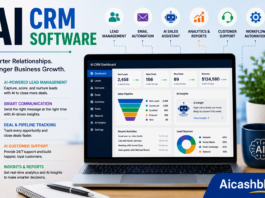
Some AI tools connect with email platforms, accounting software, customer relationship management (CRM) systems, and online stores.
These connections reduce manual work because information can move automatically between different applications.
Common Mistakes Small Businesses Make With AI
AI is powerful, but using it incorrectly can create problems.
Here are some common mistakes to avoid.
Depending Completely on AI
AI should help you, not replace your judgement.
Always review AI-generated content before publishing it or sending it to customers.
Check for mistakes, outdated information, spelling errors, and statements that do not fit your business.
Ignoring Data Privacy
Some business information is confidential.
Avoid entering sensitive customer details, passwords, financial records, or private company information into public AI tools unless you understand how that service stores and protects your data.
Using Too Many AI Tools
Many beginners install several AI applications at once.
This often leads to confusion and unnecessary subscription costs.
Start with one or two useful tools.
Once you become comfortable, you can gradually expand your AI toolkit.
Expecting Perfect Results
AI sometimes gives incorrect answers or misunderstands instructions.
This is why human review is always important.
Treat AI as an assistant, not as an expert who is always correct.
Practical Ways to Start Using AI Today
If you are completely new to AI, begin with simple tasks.
For example:
* Ask AI to draft your next business email.
* Create five social media post ideas.
* Generate blog topic suggestions.
* Rewrite a product description.
* Summarise a long document.
* Brainstorm marketing ideas.
* Translate content into another language.
* Create a weekly work plan.
As you become more confident, you can explore more advanced features such as automation and data analysis.
The Benefits of Using AI for Small Business
If you use AI wisely, it can become one of your most valuable business tools. It can help you work faster, improve your customer service, and give you more time to focus on growing your business.
Here are some of the biggest benefits.
You Can Get More Done in Less Time
Many business tasks are repetitive. Writing emails, creating social media posts, preparing reports, and answering common customer questions can take several hours every week.
AI can help you complete these tasks much faster. Instead of starting from a blank page, you can begin with an AI-generated draft and then edit it to match your business and your own style.
You Can Save Money
Hiring employees for every task is not always possible, especially if your business is still new.
AI can help you handle some routine work without increasing your payroll. For example, it can help you write marketing content, organise information, or answer simple customer enquiries.
This does not mean AI should replace people. Instead, it can help your team spend more time on work that requires human creativity, experience, and decision-making.
You Can Improve Customer Experience
Customers appreciate quick and helpful responses.
AI tools can answer common questions, provide basic support, and direct customers to the right information. This can reduce waiting times and help customers get the answers they need more quickly.
When a customer has a complex problem, a real person should still take over the conversation.
You Can Make Better Decisions
Every business collects information, but many business owners do not have enough time to study it.
AI can help you understand sales reports, website traffic, customer feedback, and marketing results. These insights can help you identify what is working well and where you need to improve.
The Limitations of AI
Although AI is useful, it is not perfect. Understanding its limitations will help you avoid costly mistakes.
AI Can Make Mistakes
AI sometimes produces incorrect or misleading information. It may misunderstand your question or provide outdated answers.
Always check important facts before using AI-generated content in your business.
AI Does Not Understand Your Business Like You Do
AI does not know your customers, your goals, or your brand unless you explain them clearly.
The more context you provide, the more useful its responses are likely to be.
AI Cannot Replace Human Relationships
People still want to deal with real people, especially when making important decisions or solving difficult problems.
Kindness, empathy, trust, and personal experience are qualities that AI cannot fully replace.
Tips for Getting Better Results from AI
Learning how to ask good questions is one of the most valuable AI skills you can develop.
Here are a few simple tips.
* Explain exactly what you want AI to do.
* Give enough background information.
* Mention who the content is for.
* State the tone you want, such as friendly or professional.
* Ask AI to revise its answer if the first response is not suitable.
* Always review and edit the final result before using it.
The quality of your instructions often has a direct impact on the quality of the results.
The Future of AI for Small Businesses
AI is improving quickly, and it is becoming part of many business tools that people already use every day.
In the future, AI is likely to help small businesses automate more routine work, improve customer service, analyse larger amounts of data, and create more personalised marketing campaigns.
At the same time, businesses will need to use AI responsibly. Protecting customer data, checking AI-generated information, and maintaining a human touch will remain important.
Business owners who learn how to use AI wisely will be in a better position to adapt as new technology becomes available.
Frequently Asked Questions
Is AI only for large companies?
No. Many AI tools are designed for freelancers, bloggers, online sellers, and small businesses. Several also offer free plans, making them accessible to businesses with limited budgets.
Do I need technical skills to use AI?
No. Most modern AI tools are designed for everyday users. If you can use a web browser and type clear instructions, you can start learning how to use AI.
Can AI replace employees?
AI can automate some repetitive tasks, but it cannot replace the creativity, judgement, and personal relationships that people bring to a business. For most small businesses, AI works best as a tool that supports people rather than replacing them.
Is AI safe to use?
AI can be safe when used responsibly. However, you should avoid sharing sensitive business or customer information with AI tools unless you understand their privacy and security policies.
What is the best way to start using AI?
Start with one simple task. For example, use AI to draft emails, generate marketing ideas, or create a blog outline. As you become more confident, you can explore additional features and tools.
Conclusion
Artificial intelligence is changing the way small businesses work, but you do not need to become an expert overnight.
The best approach is to start with one problem that takes too much of your time. Choose an AI tool that helps solve that problem, learn how to use it well, and gradually expand as your confidence grows.
Remember that AI is most valuable when it works alongside your own knowledge and experience. It can help you work more efficiently, but your ideas, decisions, and relationships with customers are what make your business unique.
If you use AI thoughtfully, it can become a practical partner that helps you save time, reduce routine work, and create new opportunities for growth.