







Blogging can be rewarding, but it also involves a lot of work.
You need to research topics, create outlines, write articles, edit your work, prepare images, improve SEO and promote your content. Doing all of this manually can take several hours for one article.
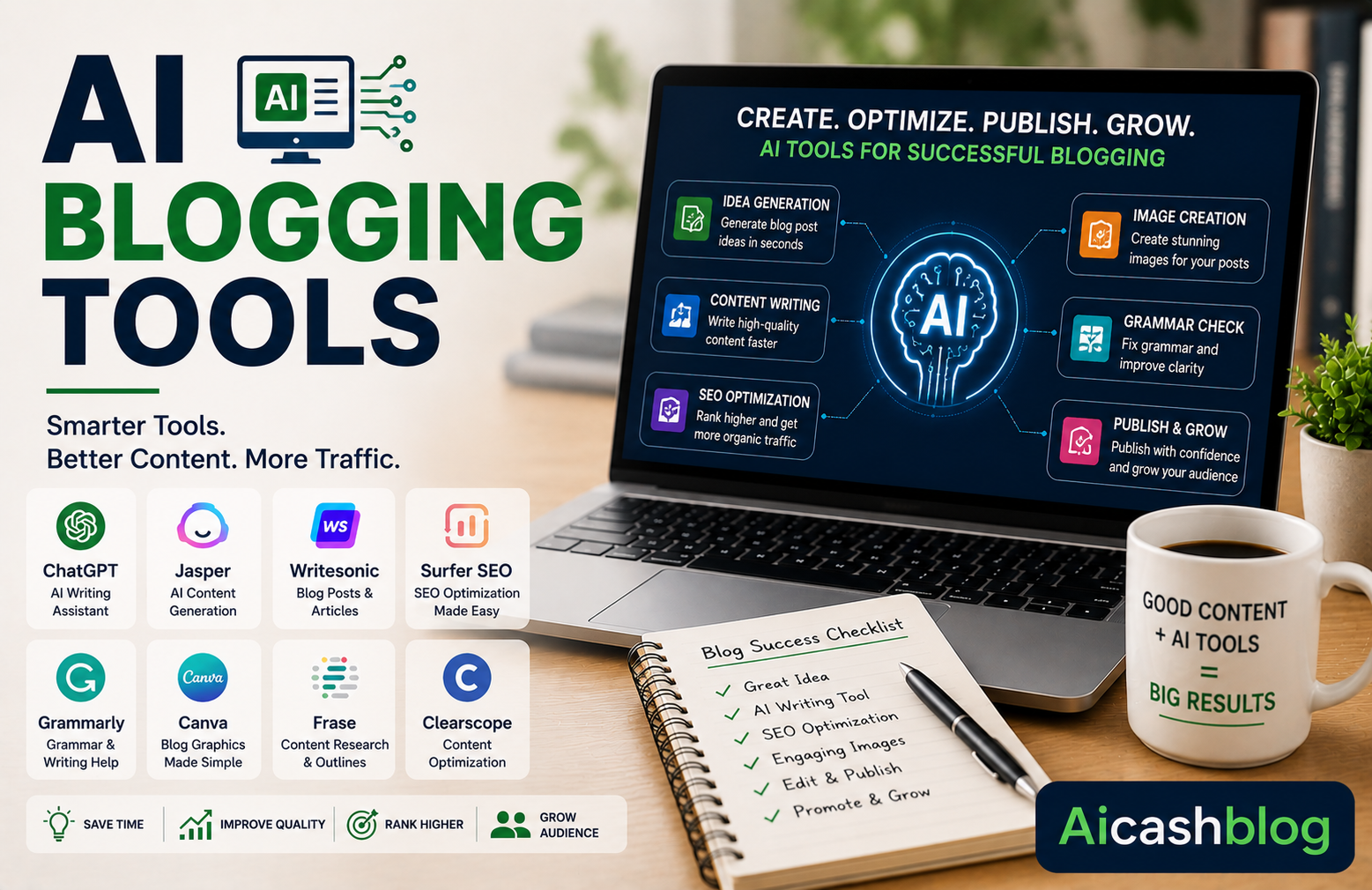
AI blogging tools can help reduce some of that workload.
You can use AI to generate ideas, organise research, create drafts, improve headlines, prepare social media content and handle other repetitive tasks. However, AI should support your blogging skills rather than replace them.
A good blog still needs useful information, accurate facts, original examples and a clear human voice.
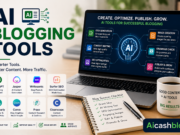
In this guide, you will learn about practical AI blogging tools, what they can help you do and how you can use them to build a better blogging workflow.
What Are AI Blogging Tools?
AI blogging tools are software applications that use artificial intelligence to assist with different parts of blogging.
Some tools focus on writing. Others help with SEO, images, research, content planning or marketing.
For example, you could use one AI tool to generate article ideas and another to help analyse your SEO.
The goal is not to let AI write everything automatically.
Instead, you can use it to reduce repetitive work and give yourself more time to concentrate on the parts that require human judgement.
1. AI Writing Tools
AI writing tools can help you create a first draft or organise your thoughts before you start writing.
You can use them for:
* Blog outlines
* Article ideas
* Introductions
* Meta descriptions
* Product descriptions
* Email content
* Social media captions
* Content rewrites
However, you should always review AI-generated writing before publishing it.
AI can produce incorrect information, repeat ideas or use generic language. Your job is to check the facts and make the article sound natural.
For AICashBlog, this is especially important because your readers are ordinary people looking for clear explanations.
The final article should sound like a knowledgeable person explaining the subject to another person, not like a machine producing paragraphs.
2. AI Keyword and SEO Tools
SEO means search engine optimisation. It is the process of improving your content so search engines can understand it and potentially show it to people searching for related information.
AI-powered SEO tools can help you identify:
* Keyword ideas
* Related topics
* Search intent
* Content gaps
* Suggested headings
* Internal linking opportunities
* Meta descriptions
These tools can save time during content planning.
But do not choose keywords simply because an AI tool recommends them.
Think about the reader first.
If someone searches for “AI blogging tools for beginners”, they probably want a practical explanation of tools they can actually use.
Your article should answer that need rather than simply repeating the keyword throughout the page.
3. AI Content Research Tools
Research is one of the most important parts of blogging.
AI can help you organise information, summarise documents and identify questions that readers may have about a subject.
For example, if you are writing about email marketing, an AI research tool can help you create a list of related subjects such as email automation, newsletters, segmentation and open rates.
You should still verify important facts using trustworthy sources.
This is particularly important when writing about prices, software features, laws, statistics or anything that can change.
AI can help you find and organise information, but it should not become your only source of truth.
4. AI Website and Blog Creation Tools
If you are starting a new blog, AI website tools can help you create the initial structure of your website more quickly.
Depending on the tool, you may be able to generate pages, layouts, website content or design ideas from a simple description.
This can be useful if you do not have much web development experience.
However, you still need to check your website carefully.
Make sure your navigation works, your pages contain useful information and your website looks good on mobile devices.
Explore this AI website creation tool
5. AI Image and Graphic Design Tools
A blog post needs more than text.
Images can help break up long sections and make your content easier to understand. You can use AI image tools to create illustrations, featured images, diagrams and other visual material.
For example, an article about AI marketing could use an image showing a business owner working with several AI tools.
You should still make sure the image fits the article and does not mislead the reader.
For AICashBlog, you can also maintain consistent branding by using a similar visual style across your featured images.
6. AI Content Repurposing Tools
Creating one article does not mean you have to use it only once.
You can turn a useful blog post into several smaller pieces of content.
For example, one article can become:
* Facebook posts
* X posts
* LinkedIn posts
* Short video scripts
* Email newsletter content
* Pinterest descriptions
* Social media captions
AI can help you turn the main ideas from your article into these different formats.
This can save time because you are building several pieces of content from research you have already completed.
7. AI Affiliate Marketing Tools
Bloggers who use affiliate marketing can also use AI to support their workflow.
AI can help you identify content ideas around products, create comparison structures and prepare draft reviews.
For example, if you are promoting an email marketing product, you could create articles such as:
* How email marketing works
* How to build an email list
* Email marketing mistakes
* Email marketing tools for small businesses
You can then recommend a relevant product where it genuinely helps the reader.
Do not turn every article into a sales page.
The primary purpose of the article should be helping the reader. Affiliate recommendations should fit naturally into the subject.
8. AI Tools for Creating Digital Products
Blogging can eventually lead to other digital products.
You could turn your knowledge into:
* Ebooks
* Guides
* Templates
* Checklists
* Prompt collections
* Worksheets
* Courses
AI can help with brainstorming, organisation and editing.
For example, if you have published several articles about AI blogging, you could eventually combine your knowledge into a practical ebook about starting an AI-assisted blog.
See how AI can help you create books and digital products
9. AI Email Marketing Tools
Your blog should not depend entirely on search engines.
Building an email list gives you another way to communicate with people who are interested in your content.
AI can help you create:
* Newsletter ideas
* Email subject lines
* Welcome emails
* Promotional emails
* Content summaries
* Follow-up messages
You can also use your blog articles as the source material for your newsletter.
For example, after publishing an article about AI blogging tools, you could send your subscribers a short summary with a link to the full article.
Learn more about AI-powered email marketing
10. AI Social Media Tools for Bloggers
Promoting your blog is just as important as publishing it.
You can use AI to help turn your articles into social media posts, captions and content ideas.
For example, after publishing a 1,500-word article, you could create five short social posts from its main points.
One post could explain an important lesson. Another could ask a useful question. Another could share a practical tip.
This gives you several ways to promote the same article without copying the entire article onto social media.
How to Choose the Right AI Blogging Tools
You do not need every AI tool available.
In fact, buying too many tools can make blogging more complicated.
Start with the areas where you spend the most time.
If writing takes too long, start with a writing assistant.
If SEO research is difficult, consider an SEO tool.
If creating images is slowing you down, look for an image-generation or design tool.
If promoting your articles takes too much time, consider content-repurposing tools.
Choose tools based on the problem they solve.
How to Build an AI Blogging Workflow
A simple AI blogging workflow could look like this:
Step 1: Choose a topic
Find a subject that your readers actually want to understand.
Step 2: Research the topic
Use trustworthy sources and identify the questions your article should answer.
Step 3: Create an outline
Organise the main points before writing.
Step 4: Write the article
Use AI where it helps, but add your own knowledge, examples and judgement.
Step 5: Edit and fact-check
Remove repetition and verify important information.
Step 6: Optimise for search
Improve your title, headings, meta description and internal links naturally.
Step 7: Create visuals
Prepare a useful featured image and supporting graphics where needed.
Step 8: Promote the article
Turn the article into social media posts and email content.
This workflow can make blogging more organised without removing the human part of the process.
Common AI Blogging Mistakes
Publishing Raw AI Content
AI-generated content can contain errors and generic writing.
Always edit before publishing.
Using AI to Create Unhelpful Articles
Do not create articles simply because AI makes it easy.
Each article should have a clear purpose and help the reader.
Focusing Too Much on Keywords
SEO is important, but keyword repetition can make your writing uncomfortable to read.
Write naturally and use related terms where they make sense.
Buying Too Many Tools
You do not need ten subscriptions to run a blog.
Start with the tools that solve your biggest problems.
Forgetting Your Own Voice
Your experience and judgement are part of what makes your blog different.
Use AI to assist your work, not to remove your personality from it.
Frequently Asked Questions
Can AI Write My Entire Blog?
AI can help create drafts, but publishing completely unedited AI content is not a good blogging strategy. You should review, fact-check and improve the material.
What Is the Best AI Blogging Tool?
There is no single best tool for every blogger. The right choice depends on whether you need help with writing, SEO, research, images, email marketing or another task.
Can AI Help Me Make Money From Blogging?
AI can help you work more efficiently, but it does not guarantee income. You still need useful content, traffic, a suitable monetisation strategy and an audience.
How Many AI Tools Does a Blogger Need?
You can start with just a few. Choose tools based on your actual workflow rather than trying to collect every new AI application.
Conclusion
AI blogging tools can make many parts of blogging easier.
They can help with research, writing, SEO, website creation, images, email marketing, social media and digital products.
But the tools are only part of the process.
A successful blog still needs useful information, accurate research, good organisation and a human voice.
Start with one or two tools that solve a real problem in your blogging workflow. Learn how to use them properly, check their output and keep improving your content.
The goal is not to let AI run your blog.
The goal is to use AI wisely so you can spend more time creating content that is genuinely useful to your readers.
Affiliate Disclosure: Some links in this article may be affiliate links. If you purchase through one of these links, AICashBlog may receive a commission at no additional cost to you.